Fresh Finds: Best Outdoor Sports We Just Reviewed
Discover
We test so you don't have to
See our buying guides→My running-shoe shelf has started to look like a toe-box intervention. Narrow shoes are out, zero-drop curiosity is in, and I’m no longer pretending a “performance fit” is comfortable after mile three.
This roundup is for walkers, road runners, gym people, nurses who sneak in outdoor miles after work, and anyone whose feet feel cramped in standard athletic shoes. Skip it if you want race-day carbon plates, technical trail lugs, or sleek lifestyle sneakers that photograph better than they feel. These are practical shoes. Some are oddly good. Some make clear trade-offs.
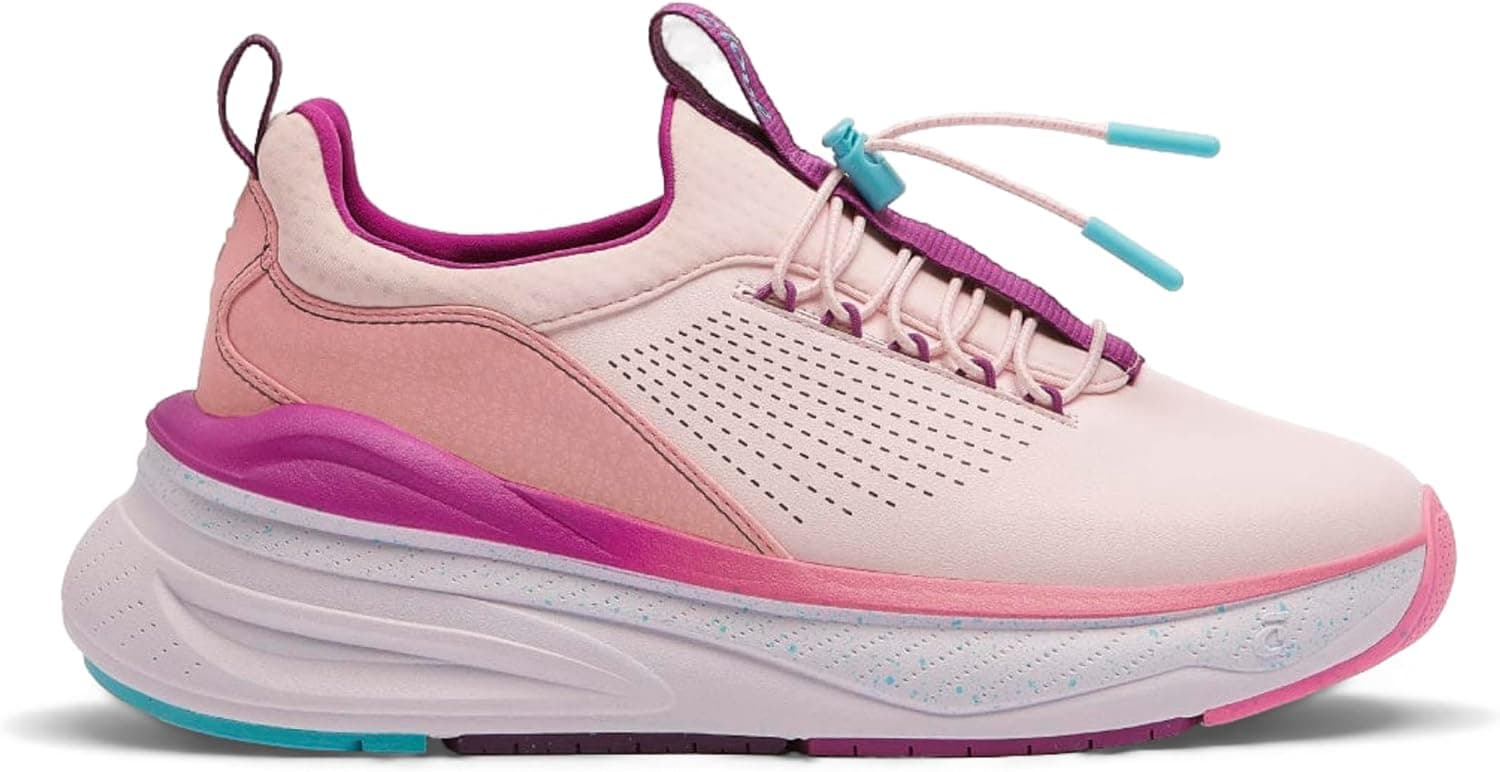
clove Forte fluid-resistant no-tie work sneakers for shifts
The clove Forte is the oddball here because it’s built more for hospital floors than Saturday pavement. Still, I wanted it in this roundup because a lot of outdoor-sport people also live in standing jobs, coach kids’ games, walk the dog before sunrise, or need a shoe that can handle wet grass, coffee spills, parking lots, and long days without looking destroyed by dinner.
This is the shoe I’d consider for recovery walks, travel days, rainy errand loops, or sideline duty. The fluid-resistant upper is the headline, and it matters. A mesh runner breathes better, sure, but it also soaks up mystery puddles and stays gross. The Forte feels more protective and easier to wipe down, which is exactly why it costs more than the others here at $175.
It’s not the shoe I’d grab for tempo runs. It has that work-sneaker sturdiness that can feel reassuring on hard floors but a little too contained for runners who like flex and ground feel. The no-tie setup is useful, though. I’m usually suspicious of elastic laces because they can make a shoe feel vague, but for people who are in and out of shoes all day, convenience has value.
- Easy-clean upper: Great for wet sidewalks, muddy parking lots, and people who don’t want their shoes to absorb every spill.
- Long-shift comfort: The support makes sense for standing and walking on hard surfaces for hours.
- No-tie convenience: Handy if you’re changing shoes at work, at the gym, or in a locker room.
- Too much shoe for running: It doesn’t have the light, lively feel I want for regular road miles.
- Price is serious: At $175, it needs to solve a real workday problem, not just be a casual walking shoe.
Check the current price on Amazon.
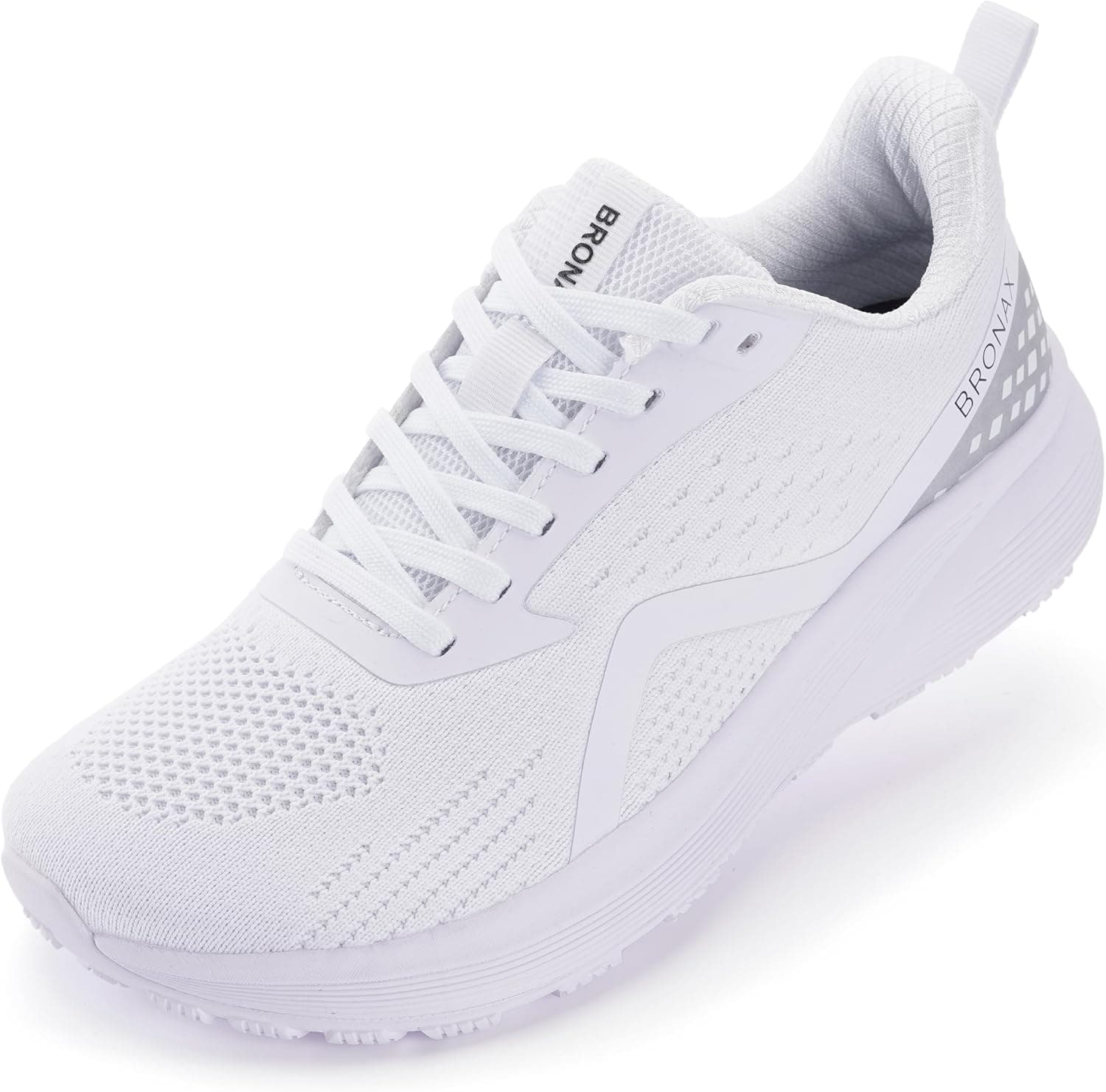
BRONAX Women's Wide Toe Box Road Running Shoes Sneakers
The BRONAX wide toe box runner feels like the shoe a friend texts you about after realizing her pinky toes have been angry for years. At $46.42, it sits in that useful zone where you can experiment with a roomier fit without feeling like you’ve made a dramatic footwear commitment.
The first thing to know is that this shoe is more “comfortable daily road shoe” than serious running tool. That’s not an insult. A lot of people don’t need aggressive geometry, stiff plates, or a hyper-specific training rotation. They need a shoe that can handle a three-mile walk, a light jog, a school drop-off loop, and maybe a treadmill session when the weather turns nasty.
The toe box is the main reason to care. It gives the forefoot room to spread instead of tapering into that familiar sneaker point. For bunions, wider feet, or just anyone tired of numb toes, that shape can be the whole decision.
The trade-off is that generous width can feel sloppy if your foot is narrow through the midfoot. You may end up tightening the laces more than you want, and then the top of the foot gets pressure while the front still feels broad. That’s the classic wide-shoe problem.
- Room up front: The toe box is the selling point, especially for walkers who hate compressed toes.
- Good everyday price: Cheap enough to try as a walking or light running shoe without overthinking it.
- Rubber outsole grip: Better for sidewalks, paved paths, and errands than foam-bottom budget sneakers.
- Fit may feel loose: Narrow-footed buyers may struggle to lock the heel and midfoot down.
- Not a speed shoe: It’s comfortable, but it doesn’t have the snappy feel runners may want for workouts.
Check the current price on Amazon.
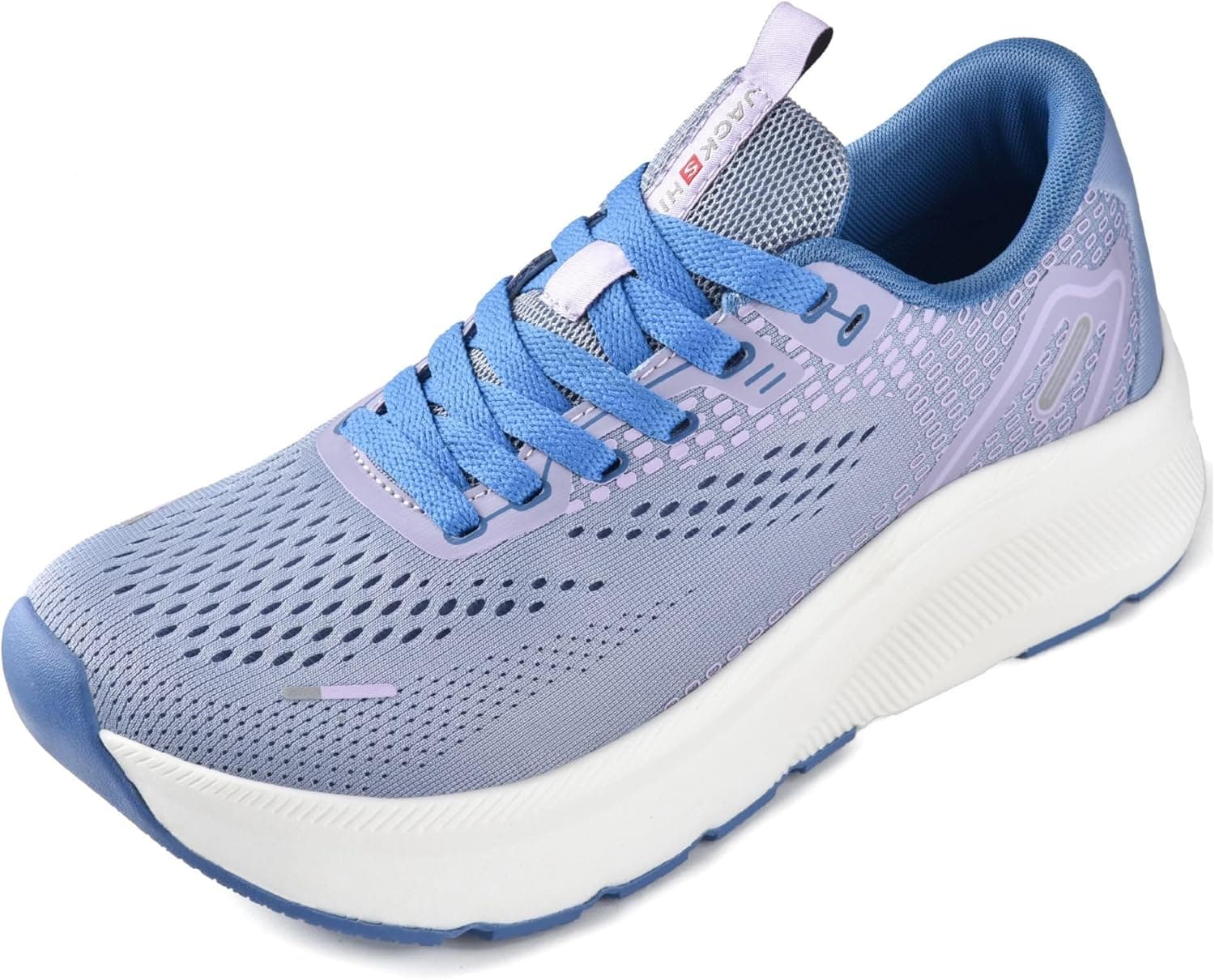
JACKSHIBO Wide Toe Box Zero Drop Sneakers for Women
The JACKSHIBO is the shoe for the person who wants foot-shaped space but is nervous about going too minimal. That combination is more common than shoe brands seem to admit. Plenty of people want a wide toe box and a flatter platform, but they don’t want to feel every pebble in the parking lot.
This one has a zero-drop setup, meaning your heel and forefoot sit at the same height. That can feel natural if you’re used to barefoot-style shoes or lower-drop trainers. It can also feel strange if you’re coming from traditional running shoes with a big heel rise. Calves notice. Achilles tendons notice. I wouldn’t make it your only shoe on day one.
The thick sole changes the personality. Some zero-drop shoes feel almost slipper-like and low to the ground. This one has more cushion underfoot, which makes it friendlier for long walks, gym sessions, and casual road miles. The arch-support language may appeal to plantar fasciitis shoppers, though I’d still be careful with any shoe claiming to solve foot pain. Shoes can help. They can also irritate things if the geometry is wrong for your body.
What I like most is that it doesn’t pretend wide means shapeless. There’s room where toes need it, but the shoe still reads like a real athletic sneaker. The downside is bulk. A thick zero-drop shoe can feel a bit contradictory, especially if you expect a nimble barefoot feel.
- Wide forefoot shape: Toes get space without the whole shoe feeling like a box.
- Cushioned zero drop: More forgiving than ultra-minimal shoes for walking and gym use.
- Supportive daily feel: Better suited to long casual wear than thin barefoot trainers.
- Adjustment period needed: Zero drop can stress calves and Achilles if you switch too fast.
- Thick sole feel: People wanting close ground feedback may find it bulky.
Check the current price on Amazon.
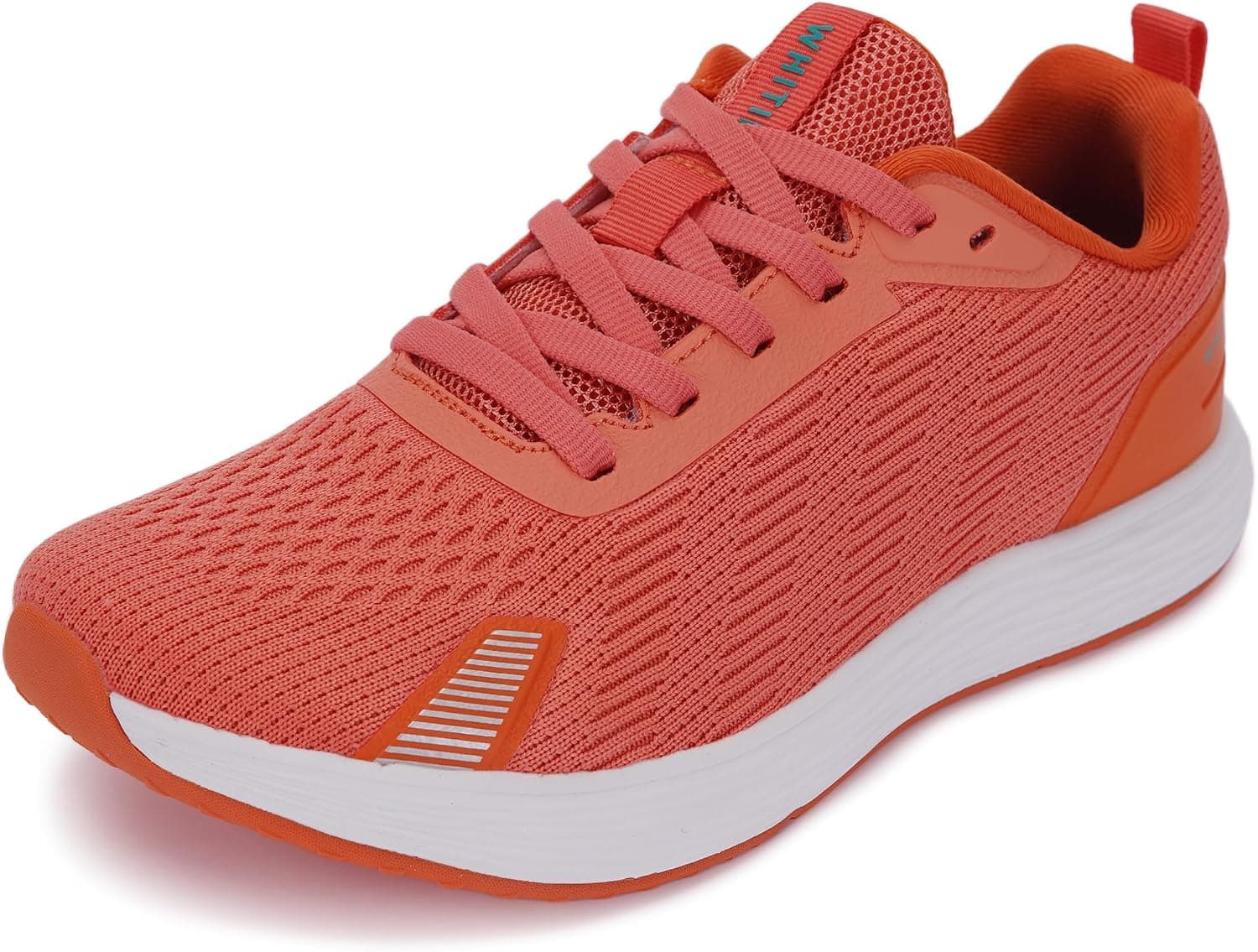
WHITIN Women's Wide Toe Box Zero Drop Road Running Shoes
WHITIN has become one of those brands people mention in budget barefoot and wide-toe-box conversations, usually followed by “for the price, though.” This model, at $37.99, is the cheapest shoe in the group, and that matters because zero-drop experimenting can get expensive fast.
This is the shoe I’d point to for someone curious about natural foot movement but not ready to spend premium money. It has the wide toe box, the flatter stance, and a more grounded feel than a typical cushioned road runner. Around the neighborhood, on paved park paths, or for casual gym work, that can feel surprisingly freeing.
The catch is durability and refinement. Budget shoes often feel fine on day one, then reveal their shortcuts in the upper, insole, or outsole after enough miles. I wouldn’t buy this expecting it to replace a higher-end daily trainer for a heavy running schedule. I would buy it to test whether zero drop and wide toe space agree with my feet.
The other issue is transition. A low-cost shoe still changes your mechanics. People sometimes treat cheaper shoes casually, then overdo it because the first walk feels comfortable. Bad idea. Start with short sessions. Let your feet and calves catch up.
- Low-risk price: Great for testing zero drop without spending over $100.
- Natural toe spread: The shape gives the forefoot more freedom than standard running shoes.
- Stable platform: The flatter base feels planted for walking and light workouts.
- Questionable longevity: Heavy runners may wear through comfort or outsole faster than expected.
- Requires patience: Jumping straight into long runs can punish calves and arches.
Check the current price on Amazon.
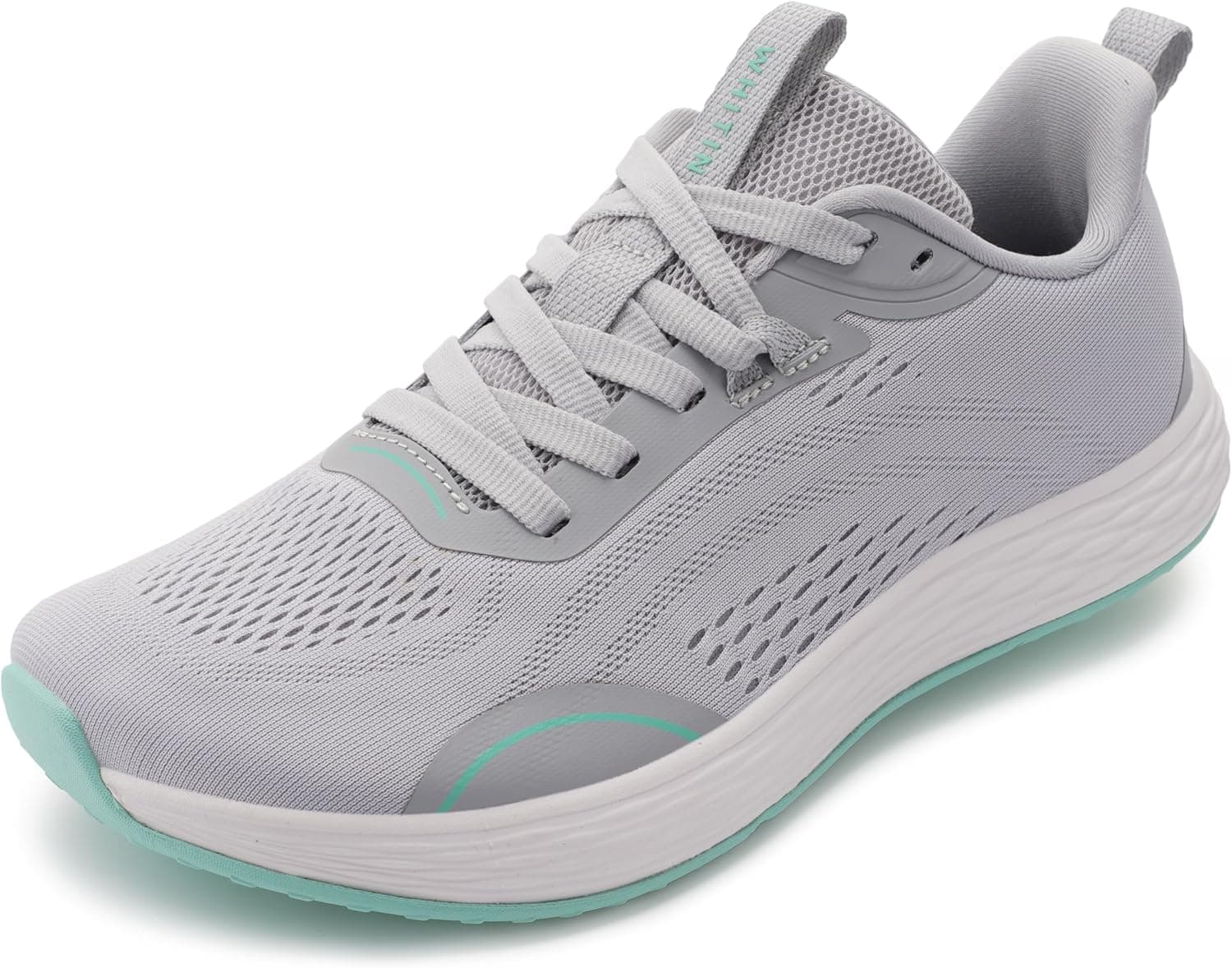
WHITIN S885 Women's Wide Toe Box Zero Drop Running Shoes
The WHITIN S885 feels like the more athletic sibling in this little wide-toe-box cluster. At $45.99, it’s still budget-friendly, but the pitch is more about lightweight active use than basic comfort. That distinction matters if you’re planning to do more than stroll.
I like this one most for people who already know they enjoy zero-drop shoes and want something simple for road running, walking, or gym circuits. The roomy toe box helps with balance work and lifting because your toes can actually splay instead of being pinched together. On bodyweight lunges or light strength days, that flatter base feels more honest than a high-heeled running shoe.
For road running, I’d keep expectations reasonable. It can work for easy miles if your body likes zero drop, but it isn’t going to feel plush or propulsive like more expensive trainers. That’s fine for some runners. For others, especially heel strikers used to high-cushion shoes, it may feel underwhelming.
The S885 also has the usual minimalist-adjacent problem: it asks more from your feet. That can be a feature, but only if you build up gradually. I’ve made the mistake of changing shoe geometry before a long weekend of walking, and by Sunday night my calves felt like they had filed a complaint.
- Light active feel: Better for gym sessions and easy movement than heavier cushioned options.
- Roomy toe box: Useful for wide feet, toe splay, and balance-focused training.
- Budget-friendly entry: Costs far less than many natural-running shoes.
- Limited cushion feel: Runners wanting soft landings may find it too bare.
- Not for instant switching: Zero-drop beginners should ease in slowly.
Check the current price on Amazon.
The one I’d buy depends on the job. For actual standing work, rainy commutes, and wipe-clean practicality, the clove Forte is the clear premium pick, though the price stings. For a cheap wide-toe-box road shoe without committing to zero drop, I’d start with the BRONAX. For zero-drop curiosity on a tight budget, the basic WHITIN is the safest experiment. My personal pick for mixed outdoor walking, gym days, and easy movement would be the WHITIN S885 because it feels the most useful across a normal week. The JACKSHIBO is the better call if you want zero drop but still crave a thicker, more cushioned underfoot feel.
Discover